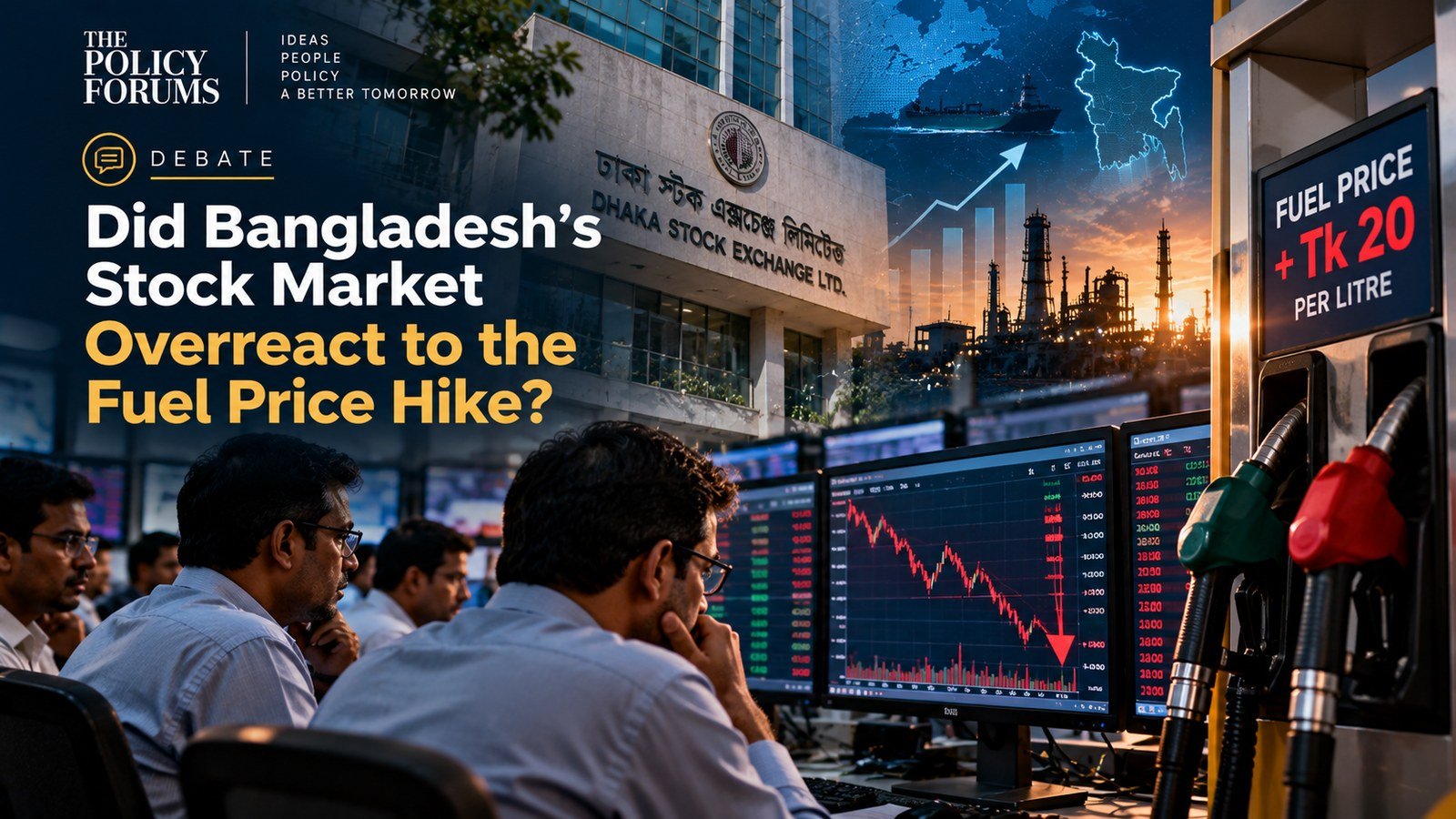
The trigger: After the government raised fuel prices by Tk20 per litre citing global energy pressure from Middle East tensions, the Dhaka Stock Exchange’s benchmark DSEX index fell 0.74% to 5,550, ending a four-session rally. Textiles fell 2%, paper 1.9%, and travel 1.7%, with Walton Hi-Tech the single biggest loser at nearly 12% (though partly due to a separate dividend adjustment).
The case that the reaction was justified: EBL Securities argued higher fuel prices will raise transportation and production costs across manufacturing sectors while adding further pressure to consumer inflation — a real, fundamental cost increase for fuel-intensive sectors like textiles and travel, not a panic reaction.
The case that it was overblown: Sheltech Brokerage described the session as driven by “profit-taking activity and cautious sentiment” following four days of gains — meaning investors may have been looking for a reason to lock in profits regardless of the fuel news, amplifying a correction that was arguably due anyway.
Policy implication: Whichever interpretation is right, the episode illustrates how directly energy policy now transmits into financial markets and investor sentiment in Bangladesh — a fuel price decision made for macroeconomic and fiscal reasons has immediate, visible capital-market consequences.
Where I land: The sector-specific pattern — heavier losses in fuel-intensive textiles, paper, and travel rather than a broad-based selloff — supports the fundamentals-based explanation over pure profit-taking, even if some of the four-day rally’s gains were arguably ready for a pullback regardless.
Confidence level: Moderate. The index and sector movement figures are concrete, but attributing precise causation between the fuel hike and the sell-off, versus ordinary profit-taking, relies on analyst interpretation rather than hard data.
Related reading: Fuel price shock sends stocks lower, snaps four-day rally — The Business Standard