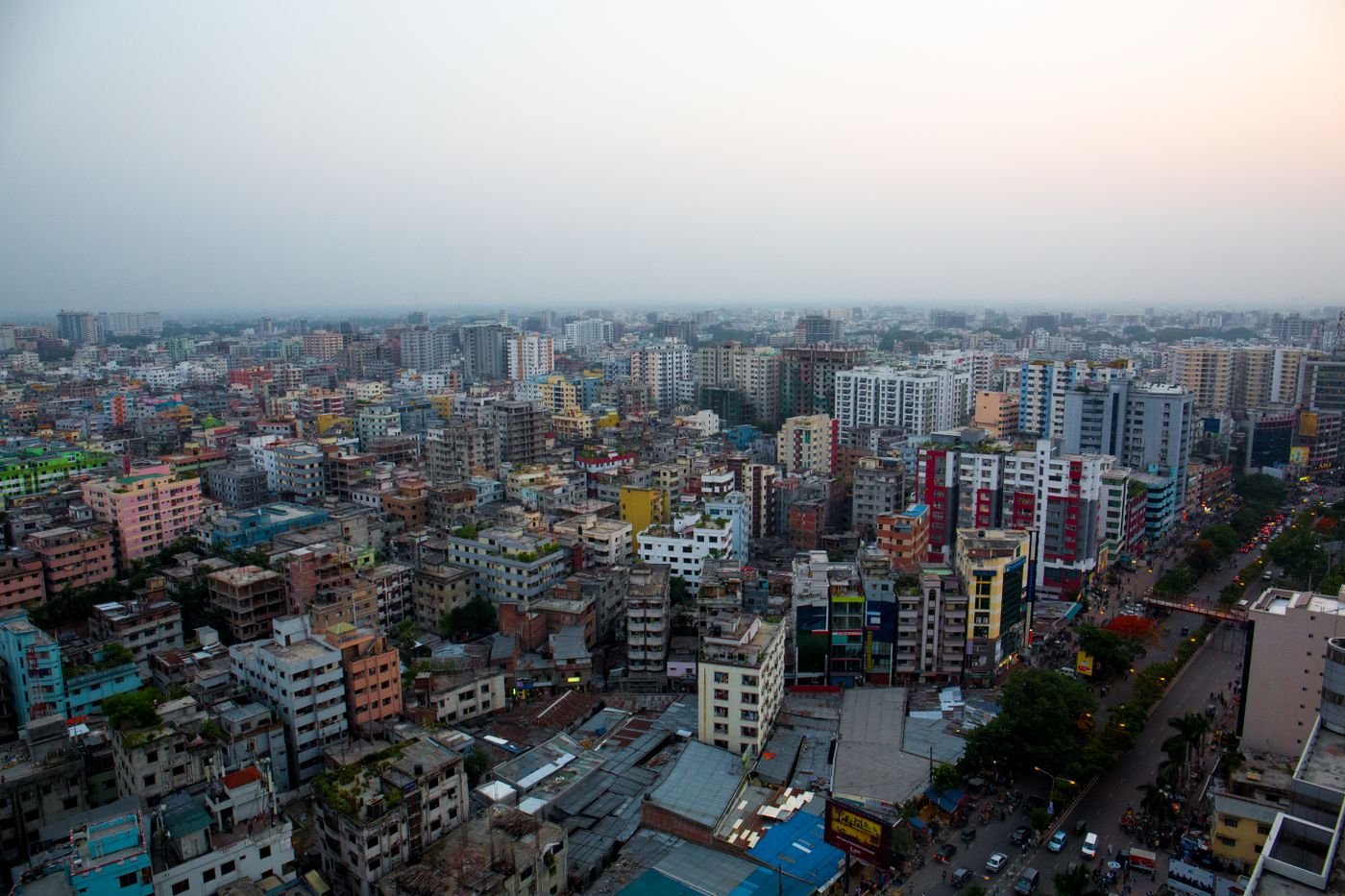
The claim: At the October 17 launch of PPRC’s State of the Real Economy, Hossain Zillur Rahman said Bangladesh’s economy is “caught in a deep and complex structural trap” — not a temporary setback.
The idea worth breaking down: A cyclical slowdown fixes itself as conditions improve: demand recovers, credit flows, investment returns. A structural trap is different — the weaknesses reinforce each other. Weak households spend less; weak banks lend less; low investment means fewer jobs; and a thin revenue base leaves the state unable to spend its way out.
Evidence pointing that way: Revenue is around 7% of GDP, among the lowest in the world, according to the IMF, which also called the financial sector “very weak.” The IMF expects inflation to reach 10.9% in FY2026-27. Rahman pointed to household hardship, employment and healthcare difficulties, and rising debt alongside stagnant investment.
Counterargument: Part of the current weakness is external — higher energy prices, the Middle East conflict and the Hormuz disruption. If those ease, some growth could return without deep reform.
Policy implication: If the trap diagnosis is correct, stimulus and rate cuts alone will not restore growth. Rahman’s proposed “transition compact” — economic democracy, new growth drivers, quality education, productive transformation and governance for speed — is a call to sequence reforms rather than wait for recovery.
Confidence level: Moderate. The diagnosis is plausible and consistent with IMF concerns, but separating structural from external causes needs more data.
Related reading: Economy caught in complex structural trap: Zillur Rahman — The Business Standard; IMF calls for tight monetary policy, broader reforms — The Daily Star