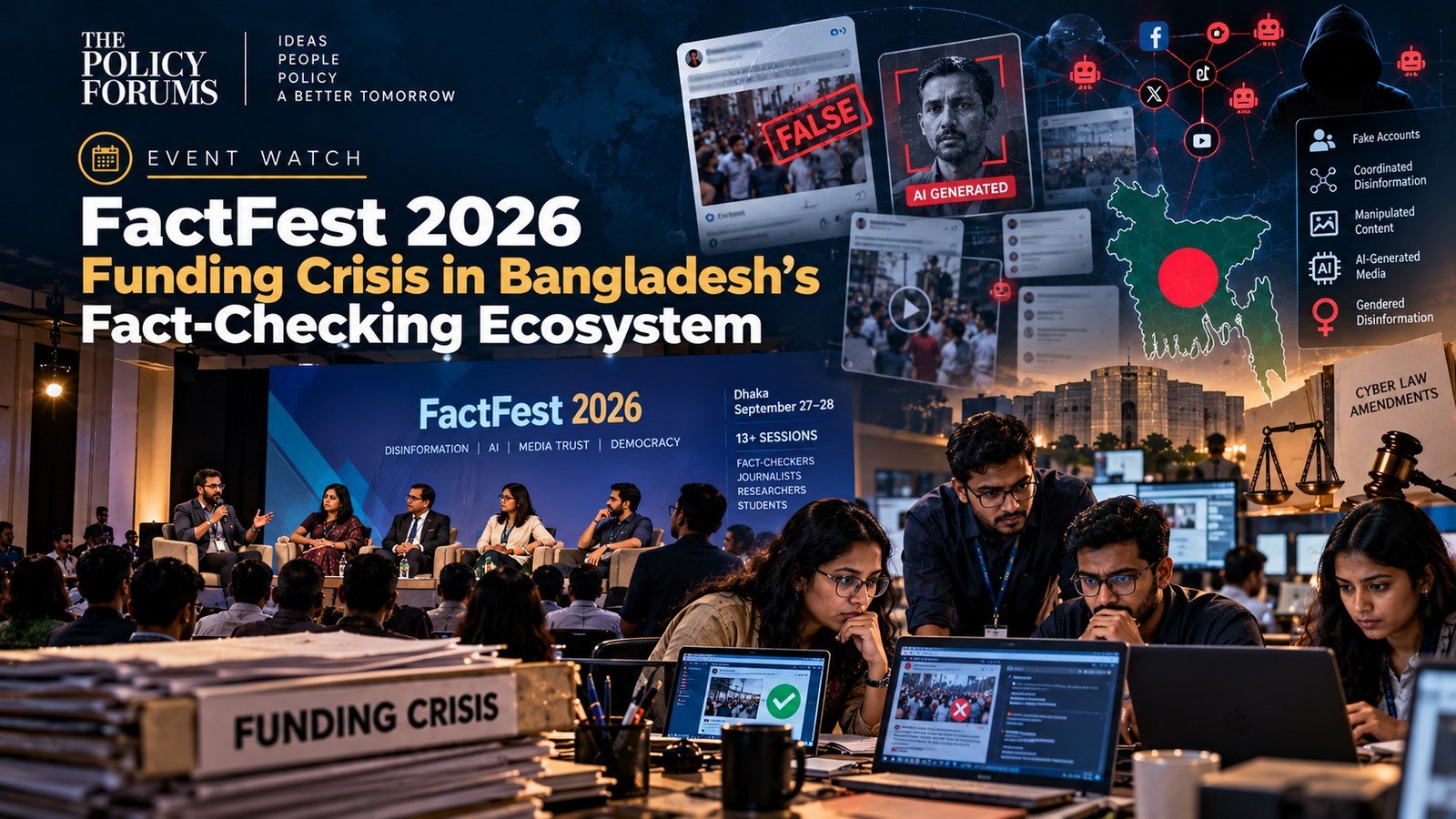
What happened: FactFest 2026, organized by Digitally Right and the Fojo Media Institute, brought together roughly 100 fact-checkers, journalists, researchers, and students in Dhaka on September 27-28 for more than 13 sessions on disinformation, extremism, AI, and media trust.
The core tension: Rumor Scanner co-founder Md Sakiuzzaman put the funding problem bluntly: “We are having to let go fact-checkers” amid budget constraints, even as global fact-checking funding has declined since a post-2016 expansion peak — a trend Bangladesh’s fact-checking sector has so far bucked with growth, but may not be able to sustain.
The disconnect: Sessions described a persistent gap between newsrooms and fact-checking organizations: some outlets resist scrutiny of their own reporting while others actively incorporate fact-checking into editorial workflow, producing what Rumor Scanner called a “multi-layered” collaboration challenge rather than a simple funding or awareness problem.
Emerging threats flagged: Coordinated disinformation campaigns now combine manipulated content, fake accounts, and AI-generated material; gendered disinformation specifically targets women in public life; and proposed cyber law amendments were raised as a risk that could, depending on final text, criminalize fact-checking activity itself.
Counterargument: Some media-sustainability researchers argue that chasing diversified revenue (research contracts, literacy training, paid services) risks pulling fact-checking organizations away from their core public-interest mission toward whatever funders will pay for — a trade-off FactFest’s funding-crisis panel did not fully resolve.
Policy implication: If proposed cyber law amendments could criminalize fact-checking, Bangladesh risks building digital-era information-integrity capacity with one hand while constraining it with the other.
Recommendation: Legislators reviewing cyber law amendments should explicitly carve out protections for verified fact-checking activity, and donors supporting Bangladesh’s information ecosystem should consider multi-year funding commitments rather than project-based grants that leave organizations like Rumor Scanner shedding staff between funding cycles.
Confidence level: High. The event details and quotes are directly documented; the long-term funding and legal outlook remain genuinely uncertain.
Related reading: FactFest 2026: Funding crisis, newsroom disconnect challenge fact-checkers — The Business Standard