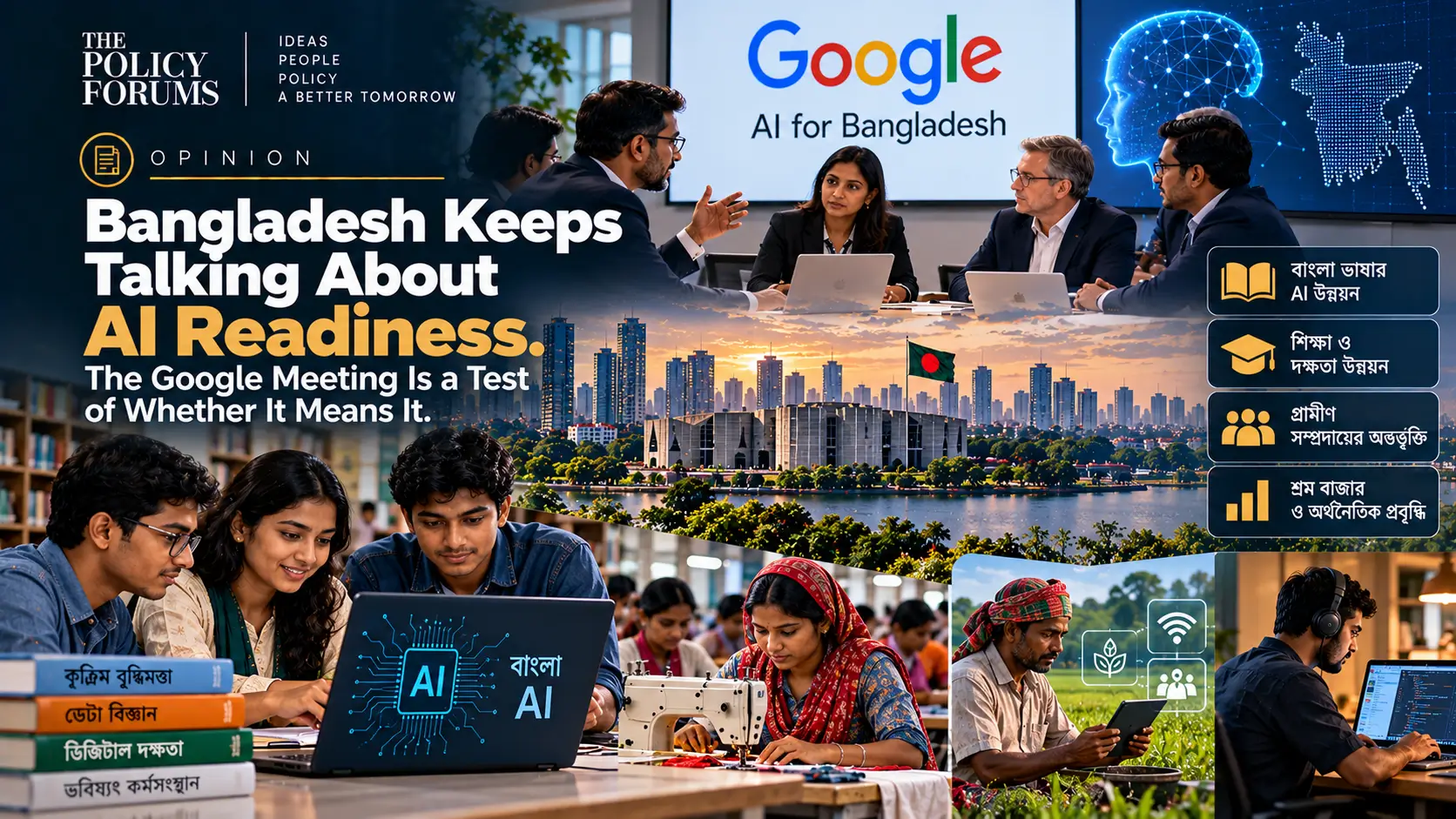
Within the space of two weeks, Bangladesh announced AI and robotics in grades 6-10 textbooks, sent a five-agency delegation to Google’s headquarters to discuss AI cooperation, and separately had a prospective investor identify AI Centres of Excellence as a focus area for over $500 million in potential investment. Taken together, the signal is unmistakable: AI readiness is now a declared national priority.
The gap commentary keeps flagging: As one widely read analysis has already argued, Bangladesh’s existing AI efforts — the Learning and Earning Development Project, scattered university curriculum integration, platforms like CodersTrust — remain “fragmented,” with rural populations and women in informal economies largely excluded. The World Economic Forum estimate that 70% of today’s job skills will change by 2030 isn’t an abstract statistic for a workforce this exposed to freelance, garment, and agricultural work disruption.
Counterargument: Government officials would reasonably point out that announcements, curriculum changes, and high-level meetings are necessary first steps that can’t be skipped — you cannot train teachers in AI before deciding AI belongs in the curriculum, and you cannot secure a Bangla-language AI commitment from Google before first having the conversation.
Policy implication: The explicit focus on Bangla-language AI capability in the Google talks is the single most encouraging detail in this round of announcements, because language access — not infrastructure or even funding — has been the most-cited barrier to AI reaching non-English-speaking, non-urban Bangladeshis.
My take: None of this is wrong, but all of it is still upstream of the actual problem: reaching rural populations and informal-economy workers who have benefited least from past digital-skills programs. A curriculum change for grades 6-10 and a partnership framework with Google will matter enormously in five to ten years; they do almost nothing for a garment worker or freelancer facing AI-driven disruption this year. Bangladesh needs a parallel, faster-moving track for workers already in the labor force, not only the next generation of students.
Confidence level: Moderate. The announcements and partnerships described are well-documented, but their real-world impact depends on implementation details — teacher training, working-group deliverables — that have not yet been specified.
Related reading: How Bangladesh can keep up with AI — The Business Standard