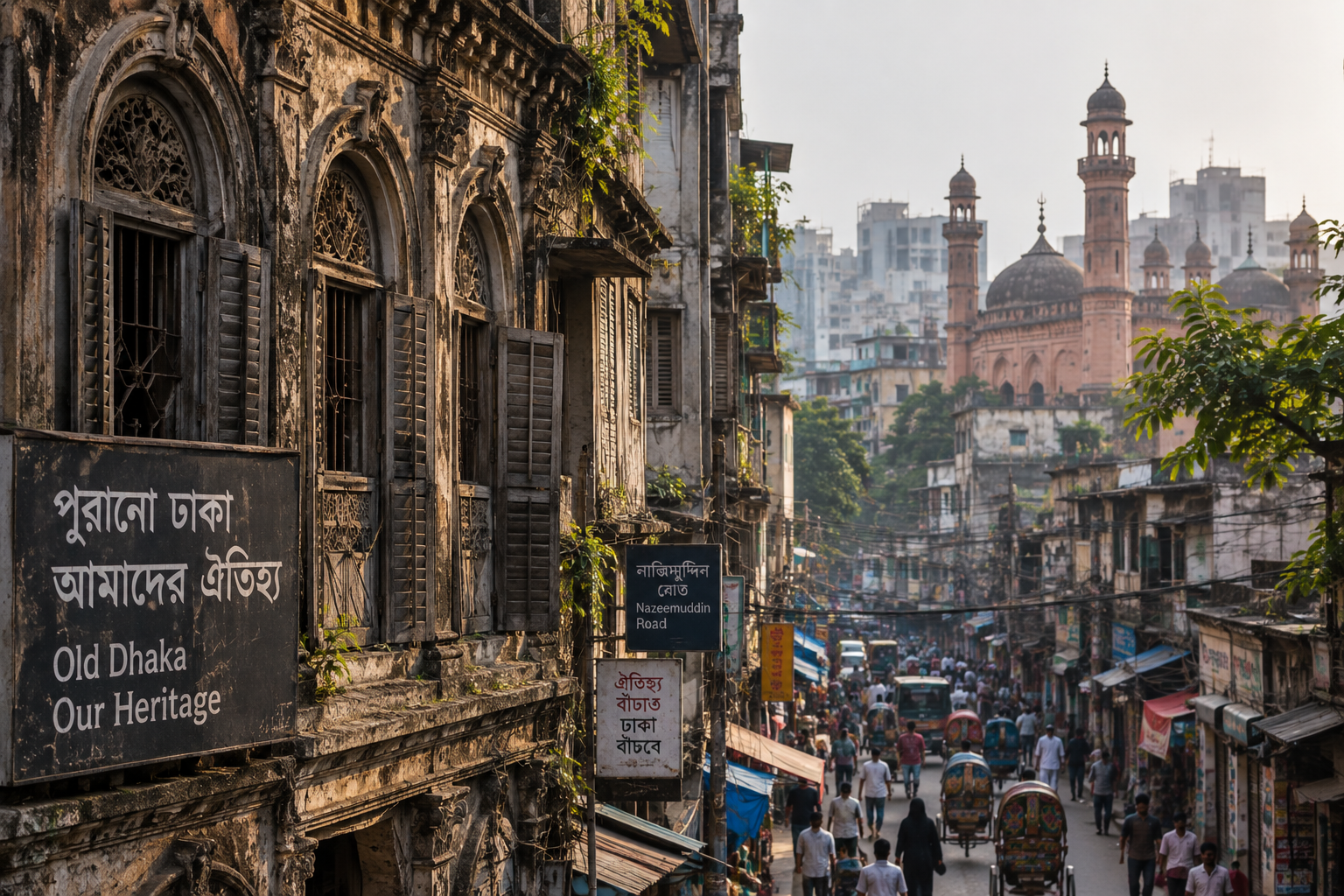
Wari was Dhaka’s first planned neighbourhood, laid out by the British in the 19th century with wide streets and European-style houses. By the 1930s it was, by most accounts, the most desirable address in the city — home to educated professionals, Hindu-Muslim communal life, and residents who would go on to include figures like Amartya Sen and the architect FR Khan, as recent reporting in The Business Standard recounts. Today, as one report after another has documented, its historic houses are being demolished piecemeal for apartments and shops, with each new city administration announcing a fresh redevelopment plan that rarely accounts for what is actually being lost.
It is tempting to file this under nostalgia — cities change, and no policy can freeze a neighbourhood in amber. I want to argue the opposite: treating heritage loss as an aesthetic complaint rather than a policy failure is exactly why it keeps happening.
The case for treating this as policy, not sentiment: Heritage districts elsewhere in South Asia — parts of old Ahmedabad, for instance — have shown that conservation zoning combined with facade-preservation incentives can let neighbourhoods modernise their interiors and infrastructure while keeping street-level character intact, generating tourism and cultural revenue in the process. Bangladesh has no comparable statutory framework for Dhaka’s historic quarters; protection depends on ad hoc administrative goodwill that changes with every mayoral term.
The counterargument I take seriously: Landowners in Wari are not villains; many are simply responding rationally to skyrocketing land values and the absence of any compensation mechanism for preserving a heritage structure instead of selling to a developer. Blaming individual choices ignores the incentive structure the city has built.
What follows: If Dhaka wants neighbourhoods like Wari to survive, the city needs a heritage conservation ordinance with legal teeth — transferable development rights that let owners sell unused building potential rather than demolish, tax incentives for facade preservation, and a heritage inventory that outlives any single administration’s redevelopment plan.
This is an opinion piece; the views are the author’s own and reflect Policy Forums’ editorial commitment to argued, evidence-based commentary rather than a claim of institutional consensus.
Related reading: Old Dhaka’s Wari: From cultural hub to just another urban jungle — The Business Standard