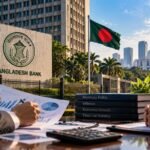
In this episode: We unpack the IMF’s latest message on Bangladesh, delivered in Bangkok during the IMF-World Bank Annual Meetings, and what it means for prices, interest rates and household budgets.
The starting point: Annual average inflation eased to 8.7% in June from above 10% a year earlier. Yet the IMF now forecasts 10.9% for FY2026-27 — the highest in nearly two decades.
What’s driving it: The IMF pointed to higher global energy prices, the Middle East conflict, the recent domestic fuel price hike, and partial implementation of the new public-sector pay scale.
Questions we explore:
- Why is the IMF asking for tight monetary policy when growth is already weak?
- How much can interest rates do against inflation driven by fuel and imports?
- What would a new IMF programme likely ask Bangladesh to change?
- How does the Hormuz disruption feed into food prices here?
Why listen: Inflation decides real wages, savings and the cost of borrowing. Understanding the forecast helps make sense of the policy debate ahead.
Related reading: IMF calls for tight monetary policy, broader reforms — The Daily Star